
Skin Care
Cracked paw pads, a tight nose, reddened skin: in winter, cold, salt, and indoor heating put your dog’s or cat’s skin to the test. The good news? A few simple steps after each walk and the right care are all it takes to protect it until spring. Here are our expert tips, along with MP Labo’s Sensiderm range to support your pet all winter long.
Paw Pads and Skin in Winter: How to Protect Your Pet from Cold, Frost and Salt?
Pads are the only part of your pet’s body in constant contact with the ground. In November, the ground changes: it becomes cold, damp, and sometimes frozen, while in some regions, it is covered with salt or de-icing products. At the same time, indoor heating is turned back on, drying out the air. Pads, nose, and skin endure these daily contrasts, often without notice until cracks or itching appear.
Why Do Your Pet’s Pads and Skin Suffer in the Cold?
Several factors specific to the cold season combine to weaken your companion’s skin:
- Cold and frost: low temperatures reduce the natural hydration of paw pad skin, causing it to lose flexibility. Stiffer, it cracks more easily on contact with hard or frozen surfaces.
- De-icing salt: spread on pavements and roads, it severely dries out paw pads and can irritate small cracks. Your pet may also ingest it while licking their paws upon returning home.
- Persistent moisture: paws that remain wet between the toes after a walk in the rain weaken the skin and promote irritation.
- Heating contrast: moving from a cold, damp exterior to a warm, dry interior depletes the skin’s protective barrier. The nose feels tight, body skin becomes drier, may itch, and can develop localized redness.
Winter Paw and Skin Care: Essential Tips for Your Pet
A few simple habits, to incorporate into your walk routine, make a real difference:
- Rinse and dry your pet’s paws after every outing: a rinse with lukewarm water followed by thorough drying, including between the toes, removes salt and residues before your pet licks them. For long-haired dogs, also trim the fur between the pads, which traps mud and moisture.
- Hydrate the paw pads regularly: like our hands in winter, they need nourishing care to stay supple and resist cracking. Applied in the evening, when your pet is calm, the treatment has time to absorb fully.
- Monitor for redness: cold and dry air can cause small patches of redness on areas with less fur, such as the belly, inner thighs, armpits, or the edges of the ears. Check these areas during grooming and soothe them at the first signs with a product designed for sensitive skin.
- Maintain skin hydration at home: avoid letting your pet sleep too close to radiators or fireplaces, space out baths, and opt for a gentle shampoo that doesn’t strip the skin’s protective barrier. Regular brushing also helps distribute natural sebum throughout the coat.
The Sensiderm® range: to hydrate and protect your pet’s skin all winter long
To support your pet during the cold season, MP Labo offers the Sensiderm® range—fragrance-free care products, made in France and designed for the sensitive skin of dogs and cats. With its Skin Barrier Protect technology, the range helps strengthen the skin barrier, the first line of defense against the cold.
- Sensiderm Balm, for paw pads and nose: this shea butter, glycerin, and Centella asiatica balm helps moisturize and restructure dry or thickened areas. It is applied in a thin layer once a day and leaves no greasy film.
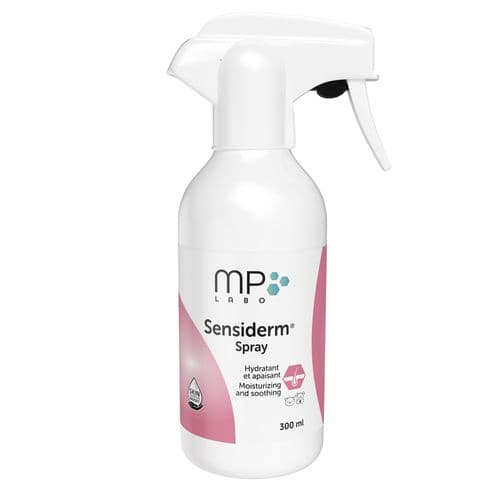
- Sensiderm Spray, for body skin: its biomimetic lipid and seaweed extract formula helps hydrate and soothe sensitive skin, particularly areas dried or reddened by the cold, and spreads easily through the coat. Two applications per week are sufficient.
- Sensiderm Shampoo, for gentle baths: fragrance-free and mild, it cleanses, hydrates, and soothes the skin without drying it out. It can be alternated with the spray for a complete care routine.
In conclusion
Cold weather shouldn’t mean damaged paw pads and tight, uncomfortable skin. By making it a habit to rinse, dry, and moisturize your pet’s paws after every outing, monitoring for redness, and choosing products tailored to their sensitive skin, you help them enjoy winter walks in comfort—from the first frost until spring returns.