The eye itself consists of two segments: the anterior segment and the posterior segment. The former comprises the cornea, iris, and lens, with its role being to focus light, much like a camera lens. The cornea and lens, both transparent surfaces, act as optical lenses, while the iris—pierced by an opening called the pupil—functions as the light beam’s diaphragm. The latter includes the vitreous body, choroid, and retina. Its role is to convert the optical signals from the light beam into neural information, which is then transmitted to the brain via the optic nerve.
If we draw a parallel with a camera, the posterior segment acts as the photographic film and the brain as the development process.
The Dog's Vision
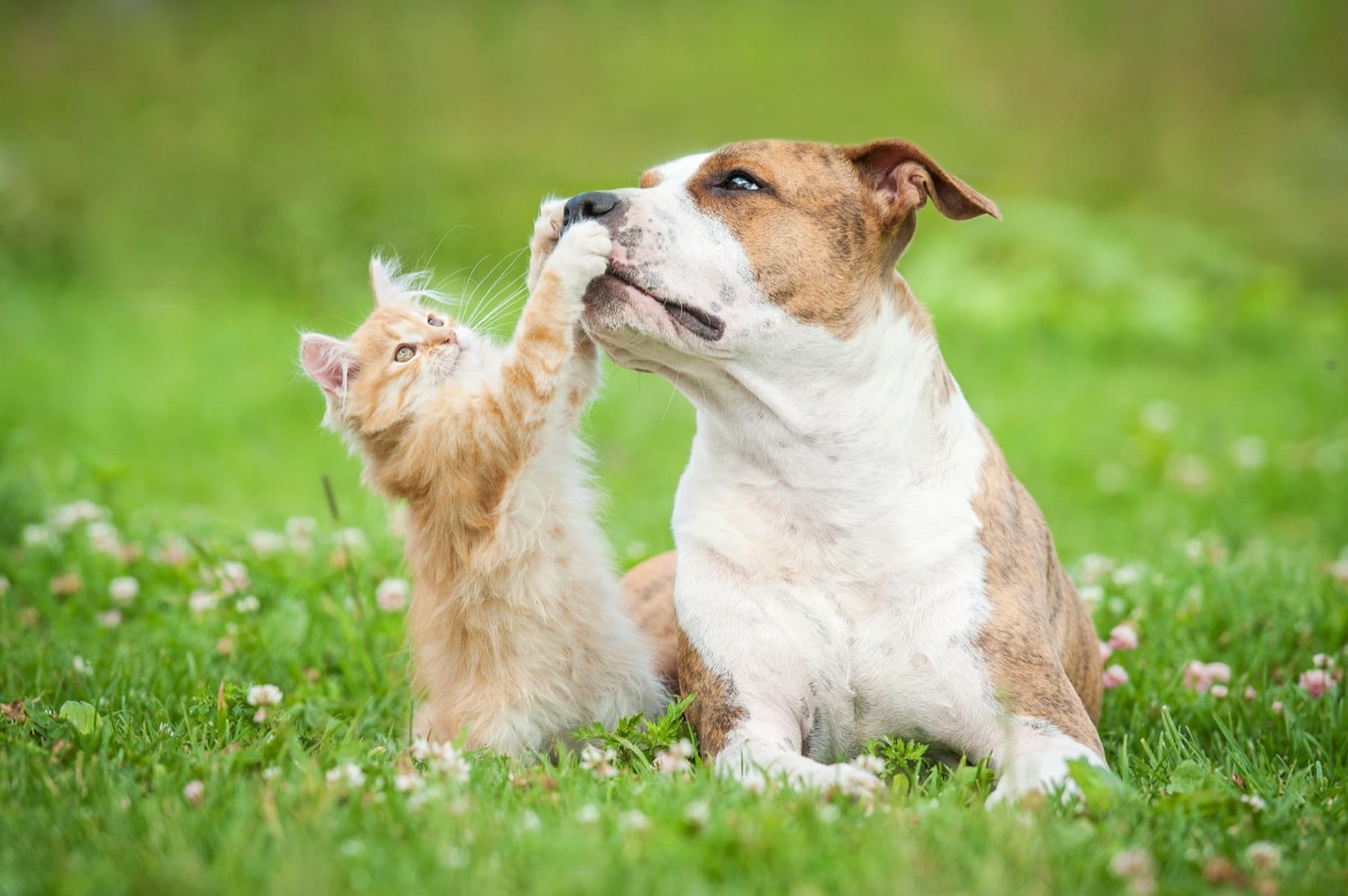
Dogs accurately perceive movement at a distance, but struggle to distinguish stationary objects. This ability is adapted to their diet and predatory behavior in the wild. They have better night vision than humans (though not as developed as cats). Their eyes are more efficient at focusing light.
A dog's vision varies by breed. Over time and based on their "role," their field of view has adapted. For instance, herding dogs have a wide field of vision, allowing them to monitor a flock—with their eyes positioned more widely on the sides. Hunting dogs, on the other hand, have a narrower field of vision, enabling them to better focus on prey, with their eyes located on the front of the head.
The Cat's Vision
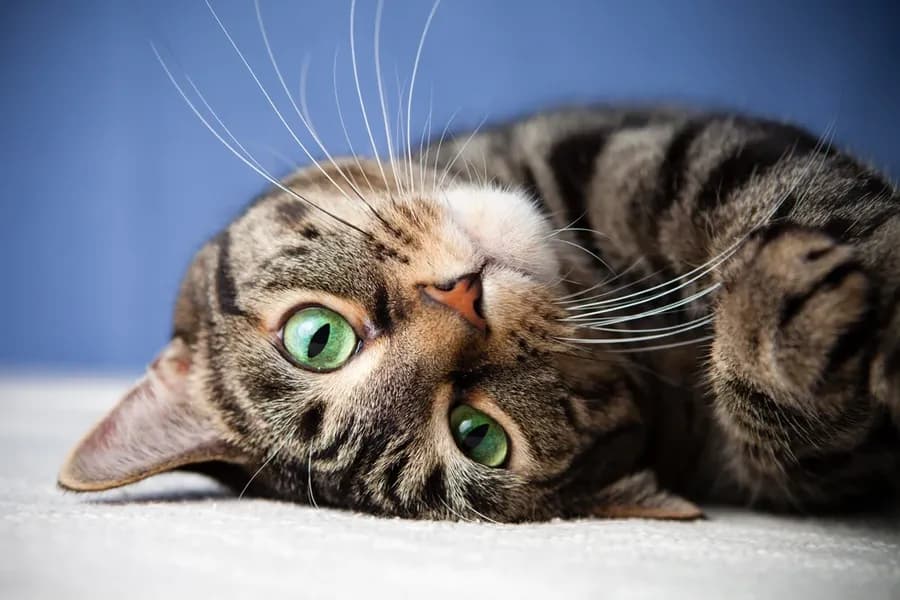
Cats are the mammals with the largest eyes relative to their skull size. Their field of vision is forward-facing, with overlapping visual axes, giving them excellent stereoscopic vision. Cats have a wider field of vision than humans—260° compared to 180°. Their retina also features a large tapetum lucidum—larger than a dog’s—which enhances light reflection toward light-sensitive cells, the rods. This trait makes them champions of night vision, requiring six times less light than humans to see—provided there’s *some* light. Cats cannot navigate in total darkness. Thanks to their slit-shaped pupils (round in dogs), they protect their retinas from excessive light and glare.
Cats, however, have fewer colour-vision specialised cells—cones. This gives them dichromatic vision, meaning they only perceive blue and yellow accurately and cannot distinguish between green and red.
Sight is therefore a sense that has evolved to adapt to the lifestyle and diet of our pets.