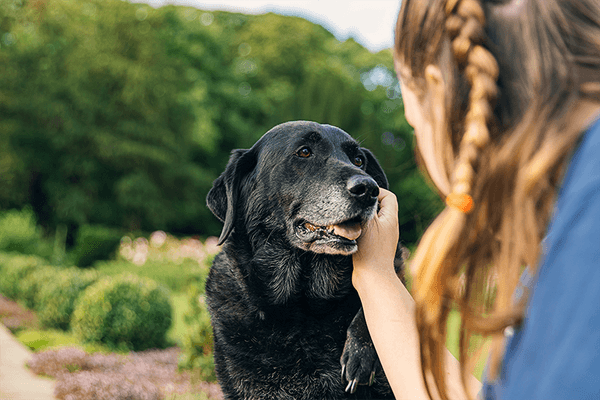

Your pet is getting older, and you want to know how to adjust their diet. While your regular vet is best placed to give advice tailored to your four-legged friend’s needs, here’s some useful information to help you along the way.
Limit calorie intake, as well as phosphorus and sodium intake
Since older animals expend less energy, their caloric needs decrease—at least initially. Over time, however, they tend to lose weight. That’s why it’s important to weigh your pet regularly, monitor their body condition score, and track muscle mass. It’s also recommended to keep an eye on phosphorus and sodium intake to support kidney and heart health. Additionally, prioritizing high-quality ingredients is key, particularly to support liver function.
Monitoring Your Water Intake
An aging pet is at greater risk of dehydration. It’s therefore important to ensure they always have fresh, clean water available. You may also want to set up multiple water stations around the house: add a small bowl of fresh water in the different rooms they like to spend time in, as well as outdoors. Moistening their food can also help.
Boosting Intake of Non-Fermentable Fibers, Essential Fatty Acids, and Antioxidants
Digestive transit tends to become more temperamental with age, and a little help is usually welcome! You can add fiber to their diet or opt for an enriched formula. Be sure to favor non-fermentable fibers, which have the advantage of producing little to no gas. Essential fatty acids become even more essential as pets age. A supply of omega-3 fatty acids—particularly EPA and DHA—is vital for senior animals. These help modulate inflammation, which is always present with age, and also support organs such as the kidneys, heart, and brain. Antioxidants, meanwhile, help protect organs and strengthen natural defenses.
Think About Your Joint Health
90% of pets over 12 years old suffer from arthritis. If this is already the case for your four-legged friend, it’s even more important to monitor their calorie intake. Adding joint-supporting botanicals to their diet, along with omega-3 fatty acids, should help. For more details, be sure to read our e-mag “How Can I Improve My Pet’s Mobility?”.
Mixing Textures
As your four-legged friend ages, their appetite may become finicky. Varying textures can help. Switching from dry to wet food might make a difference. Warming their meal can also enhance its appeal. Worth a try if your cat or dog isn’t sold on today’s menu.
Making a Dietary Transition
When changing your pet’s food, it’s best to make a gradual transition to avoid upsetting your four-legged friend’s likely more sensitive digestive system. Ideally, this should take place over a full week, phasing in the new food step by step: mix one-third of the new food with two-thirds of the old for the first 3 days, then switch to a 50/50 blend for the next 2–3 days, and finally feed two-thirds of the new food with one-third of the old for the last 3 days.
Sources :
Nutritional Guidelines for Complete and Complementary Pet Food for Cats and Dogs: This guide, provided by FEDIAF (The European Pet Food Industry Federation) and FACCO (Federation of Pet Food Manufacturers), updates its recommendations on pet food nutrient levels annually.