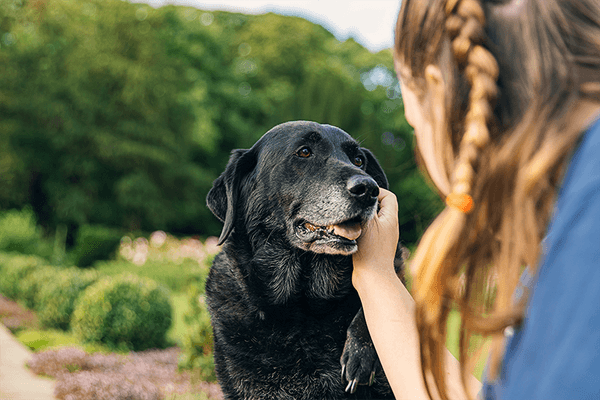
Your dog seems less energetic than before, and your vet has mentioned osteoarthritis. They likely stressed the importance of maintaining a healthy weight, keeping up physical activity, and supplementing your pet’s diet with chondroprotectors or even essential fatty acids. If your dog was in pain when diagnosed, your vet almost certainly prescribed short-term pain relief. Now, you probably want to know how your pet’s condition will progress and what signs to watch for.
It’s important to remember that osteoarthritis is an irreversible condition that progresses through painful flare-ups. The goal of management is therefore to slow its progression and maintain your pet’s quality of life and comfort by limiting the effects of cartilage degeneration. To space out painful episodes as much as possible, you’ll need to pay close attention to your dog’s behavior on a daily basis. Is he eating as usual? Does he seem to struggle when getting up, jumping into the car, or climbing stairs? Is he limping? Is he licking a specific spot (especially around the joint affected by osteoarthritis)? Does he seem anxious, sad, or fearful? Has he become easily irritable?
Also, to keep your pet healthy, it’s recommended to engage in moderate physical activity with them daily. Ideally, take them for a 30-minute walk twice a day. Don’t hesitate to log your outings’ duration and routes in a notebook. Even easier, use your smartphone—there are even apps designed specifically to track your walks!
Beyond tracking the duration and intensity of your sessions, it can be useful to add a few extra details, such as:
- Did you keep the leash on throughout the walk? If so, did he pull or stay by your side? If not, did he run? These details should be compared with his usual behavior.
- Who ended the activity?
- For an equivalent effort, do you feel he had more difficulty recovering after this session?
Schedule regular check-ups with your vet, even when there are no signs of pain. Low-level inflammation is always present, even if it doesn’t necessarily cause discomfort. This is why omega-3 essential fatty acids can be used continuously: they help modulate this inflammation and reduce flare-ups. Similarly, it’s always better to prevent pain from setting in, as it becomes harder to manage once established. To help with this, the CAPdouleur network has developed an app of the same name—CAPdouleur, CSOM—which allows pet owners and vets to share pain assessments. If your vet is part of the CAPdouleur network and deems it necessary, they may suggest using this tool. Together, you’ll build the most relevant pain assessment scale for your four-legged companion. The app lets you track your pet’s pain score in their daily life and familiar surroundings. Scores are synchronized and sent to your vet to adjust the treatment plan as early as possible.
You can already download the CAPdouleur app and fill out the pain assessment questionnaire, which is freely accessible. It will give you an initial indication of whether or not your dog is in pain, and you can then present the results to your vet.