
Whether reacting to loud noises, facing environmental changes, or encountering unfamiliar people, your dog may feel scared or stressed. In this article, we’ll explore how fear and stress manifest in dogs and share six practical tips to soothe your loyal companion.
What’s the Difference Between Fear, Stress, and Anxiety?
Fear is an emotional state triggered by an immediate and identifiable threat. It is accompanied by physiological reactions caused by the sudden release of adrenaline, such as increased heart and respiratory rates, which prepare the body for fight or flight.
Stress is a physiological state that occurs when a dog is exposed to a stimulus or environment that isn’t necessarily threatening, but is marked by unpredictability and lack of control. This exposure triggers the production of glucocorticoids, which appear later and act more slowly than adrenaline but have longer-lasting effects and can eventually deplete the body.
Important note: Emotions and physiological responses are closely linked, but they are not synonymous. Fear, for example, can trigger stress, but a dog may be stressed without necessarily feeling afraid.
Anxiety results from the cumulative effect of genetic factors (certain dog breeds are predisposed to it), environmental factors, and learning experiences. It manifests as intense stress reactions to situations that are unusual for the dog, even those that may seem trivial to the owner.
Learn to Recognize Fear or Stress Signals in Your Dog
How to Reassure Your Dog? When you notice signs of fear or stress, try to identify what’s triggering them and work to minimize their impact. Here are six practical tips to soothe your loyal companion.
- Create a Safe Space : Ensure your dog has an area where they can retreat when feeling scared or stressed, with familiar items like their bed, a toy, or a blanket.
- Avoid exposing your dog to situations that frighten them instead of forcing them to face their fears. Crowded, chaotic places should be avoided. If you can’t steer clear of noisy environments, opt for gradual habituation rather than sudden immersion.
- Establish and Maintain a Consistent Routine : Try to keep mealtimes, walks, and play sessions regular. This will give your dog a sense of predictability.
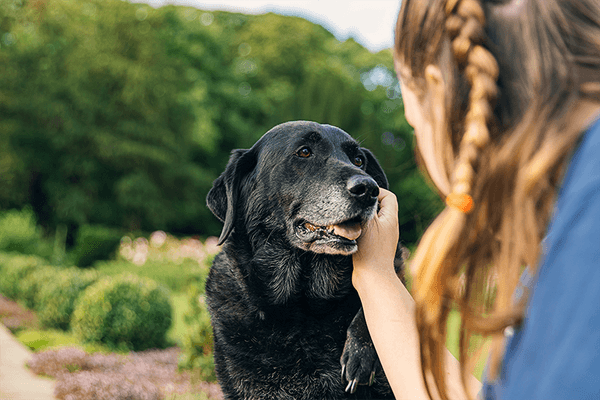
- Be Reassuring in Your Body Language : Your dog is highly attuned to physical cues. Use a calm tone and gentle gestures to communicate. While some advise against petting your dog in stressful situations, like a vet visit, this lacks scientific backing—on the contrary, a study found that dogs petted by their owners at the vet were less stressed during the appointment¹(Csoltova et al., 2017).
- Provide Enough Exercise for your dog to release energy. Physical activity is key to their emotional balance. Research² (Tiira & Lohi, 2015) shows that the biggest risk factor for noise sensitivity and separation anxiety is insufficient daily exercise.
- Use Calming Products : There are also natural calming products specifically formulated for dogs, such as supplements, that can help them relax in everyday stressful situations.
If your dog shows high stress levels or signs of anxiety, don’t hesitate to consult a professional. Your vet or a veterinary behaviorist can assess the situation and recommend tailored behavioral therapy or pharmacological support.
Discover these tips and many more tutorials on our YouTube channel.
References:
- Csoltova E, Martineau M, Boissy A, Gilbert C. Behavioral and physiological reactions in dogs to a veterinary examination: Owner-dog interactions improve canine well-being. *Physiol Behav*. 2017 Aug 1;177:270-281. doi: 10.1016/j.physbeh.2017.05.013. Epub 2017 May 10. PMID: 28501556.
- Tiira K, Lohi H. Early life experiences and exercise associate with canine anxieties. *PLoS One*. 2015 Nov 3;10(11):e0141907. doi: 10.1371/journal.pone.0141907. PMID: 26528555; PMCID: PMC4631323.