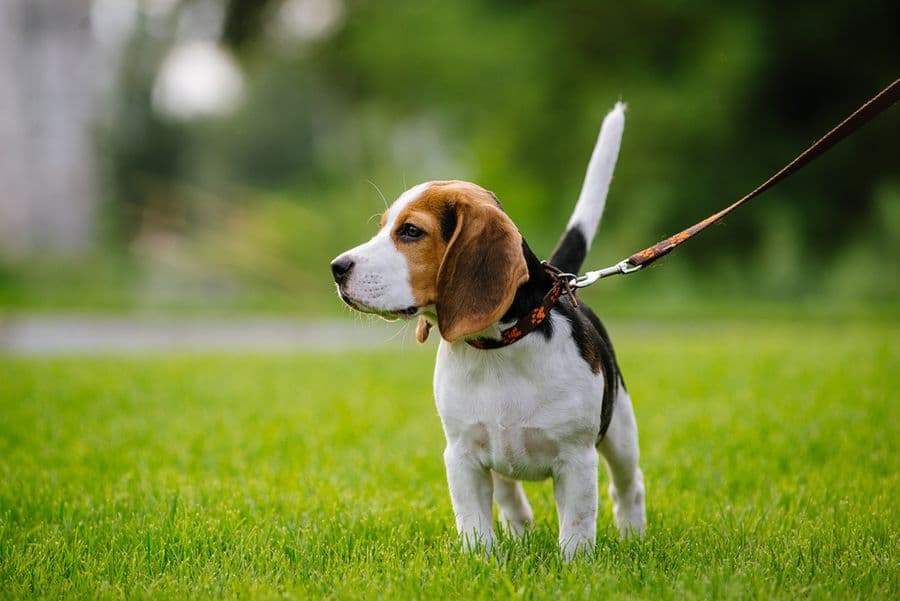
Leash Training: Essential for Your Dog’s Safety and Well-Being Leash training is key to ensuring your dog’s safety and comfort during walks. When teaching your dog to walk on a leash, the main goal is to prevent pulling and help them follow your lead. This article offers practical tips to make leash training effective and enjoyable for both of you.
Choose the Right Setting
You'll achieve faster and more satisfying results by working in a relaxed atmosphere.
- Start training in a quiet, familiar space. Teaching your dog to walk on a leash while surrounded by other dogs—and eager to greet them—can make learning nearly impossible. That’s why it’s best to begin at home, in a familiar environment with no distractions.
- Make sure your dog has had a chance to burn off energy before training sessions—this will help them stay more focused.
Use rewards to create a positive association between the leash and enjoyable moments
The positive association between good behavior and reward increases the likelihood that your dog will repeat this behavior in the future.
- Reward your dog every time it follows your commands. Make sure they’re clear, precise, simple, and easy to perform.
- Be quick when handing out rewards so your dog clearly links its good behavior to the reward and understands exactly what you expect. The reward should be given within one second of your dog performing the desired behavior.
- Avoid punishing unwanted behaviors. Punishment can discourage your dog and cause it to lose focus. Instead, focus on rewarding good behaviors—even if they’re not perfect—rather than punishing the bad ones.
Choose the Right Equipment
Opt for reward-based training methods. When it comes to choosing the right leash-walking gear, you have several options.
- Training harnesses or headcollars are effective options. They are easy to use, ensure your dog’s safety, and respect their anatomy.
- As for choke collars, which can cause neck injuries or even lead to intracranial hypertension, or electric devices, these should be avoided at all costs! A law to ban them was in fact passed by the National Assembly on January 16, 2023, and has since been sent to the Senate for approval.
Every dog learns at their own pace. Some dogs may quickly grasp leash walking, while others may need more time and patience.
- Carefully observe your dog’s responses
- Give them the time they need to adapt and succeed
- Adjust your exercises based on their progress.
By following these practical tips, you’ll be able to teach your dog to walk on a leash effectively and respectfully. If, despite your best efforts, you still struggle to train your dog to walk on a leash, it’s advisable to consult a dog trainer who uses positive, reward-based training methods. These professionals can provide tailored advice and techniques for your dog, helping you make progress in leash training in an effective and respectful way.
Discover these tips and many more tutorials on our YouTube channel.