Your cat has always been lively, curious, independent… but lately, you’ve noticed a shift. It’s normal: like us, cats change with age. And while they often hide how they feel, certain signs can give them away.
Here’s what to look out for to better understand and support this new life stage.
A Slower Pace of Life
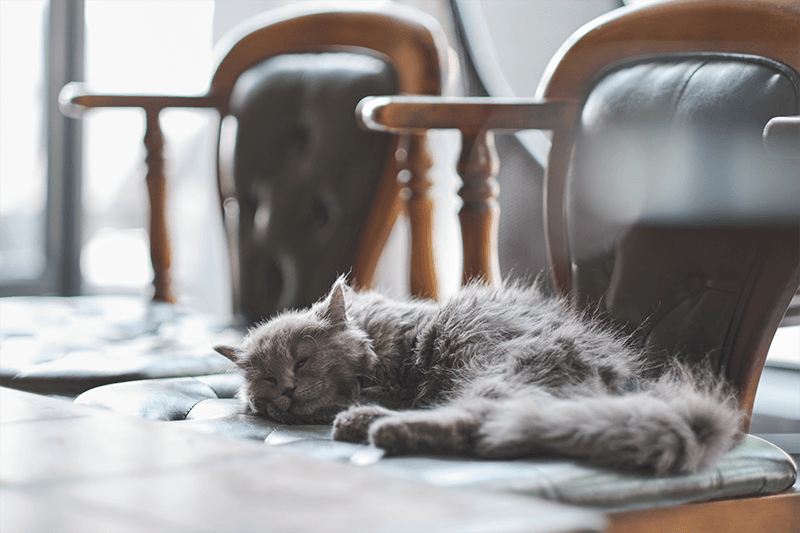
As cats age, they often become calmer. They sleep longer, play less, and seek out cozy spots to rest. This is natural behavior—their bodies need more rest, and their curiosity may give way to a certain routine. Nothing to worry about, as long as the change is gradual.
More controlled movements
You may have noticed your cat jumping less high, hesitating before climbing onto furniture, or moving with less fluidity. These are often signs of a body that’s slowing down. It’s not necessarily a problem—just an adjustment to new physical limits. That’s why it’s important to make their favorite spots easier to reach: their bed, food bowl, litter box…
Less rigorous grooming
Grooming is a vital ritual for cats. But over time, they may become less meticulous. This could be due to lower energy, reduced flexibility, or a need for peace and quiet. If you notice their coat becoming less tidy, you can lend a gentle hand with a soft brush—something they’ll often appreciate if they’re in a calm moment.
Changing Dietary Habits and Needs
An older cat may take more time at their bowl or even develop new preferences. It’s important to stay attuned to these changes: they don’t necessarily signal a problem, but rather that their appetite, digestion, or overall comfort are shifting with age. When in doubt, jot down what you notice to discuss with your vet.
Small oversights or forgetful moments
Some older cats become a little more absent-minded: they meow for no clear reason, seem to be searching for something, or hesitate before entering a familiar room. This kind of behavior isn’t necessarily serious, but aging cats deserve a little extra patience and familiar cues in their daily lives. A stable routine and a predictable environment are often very reassuring for them.
Key Takeaways
Aging isn’t a disease, but a natural stage in your cat’s life. By observing their habits, movements, and pace, you’ll be better equipped to meet their needs.
Regular monitoring, care, and a comfortable environment make all the difference in helping them get through this time.