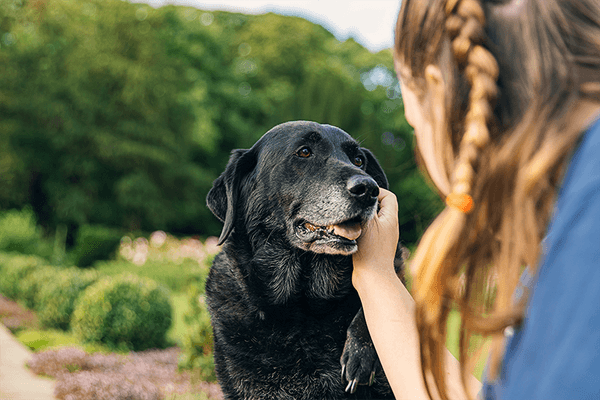

Does your dog often have dirty, dry, and red eyes? They may be suffering from dry eye syndrome. This condition is fairly common and usually requires lifelong management.
What Are Tears For?
Tears are produced by the lacrimal glands and form what is known as the precorneal tear film on the surface of the cornea. This film serves several functions:
- It protects the eye's surface from dryness and bacteria;
- it lubricates the ocular surface, allowing eyelids to glide smoothly over the cornea and act as "windshield wipers" to clear away dust and debris;
- it delivers essential nutrients to the cornea;
- and it ensures a sharp, clear image by forming a smooth optical surface.
The pre-corneal tear film consists of 3 layers:
- The mucin layer, produced by the conjunctival goblet cells (located on the inner surface of the eyelids), is in direct contact with the cornea and enables the tear film to adhere to it;
- the central aqueous layer is produced by the main and nictitating glands (also called accessory, though misleadingly so, as they still produce around 30% of the aqueous layer);
- the outermost lipid layer, produced by the Meibomian glands (located along the free edge of the eyelids), functions to limit evaporation of the aqueous layer.
Dry Keratoconjunctivitis
This condition, also known as dry eye syndrome, affects approximately 1 in 100 dogs. Certain breeds are predisposed, including the Cocker Spaniel, Cavalier King Charles Spaniel, West Highland White Terrier, and Shih Tzu.
In this case, the lacrimal glands responsible for producing the aqueous layer do not produce enough: the ocular surface is therefore insufficiently lubricated and hydrated, leading to inflammation of the cornea and conjunctiva (hence the name dry keratoconjunctivitis (DKC)). This condition manifests as redness, whitish to yellowish or even greenish discharge, and an ocular surface that appears dry, uneven, and dull.
To diagnose KCS, your veterinarian will rely on clinical signs (the symptoms mentioned earlier) as well as the results of the Schirmer test. This test is performed using a blotting paper strip, the end of which is placed under the lower eyelid, in the conjunctival fornix. After one minute, it should show a value of around 15 millimeters. Below 10 mm/min, KCS is considered present.
Can We Overcome a Lack of Tears?
As with many diseases, the chances of recovery depend on the cause. If the lack of tears is due to certain medications or another condition—such as certain infectious diseases, diabetes, or hypothyroidism—stopping the treatment or curing the underlying illness usually restores normal tear production. When dry eye results from a developmental defect in the lacrimal gland, its surgical removal (e.g., due to a tumor), or an immune disorder—the most common cause of KCS—the treatment must continue for the animal’s lifetime.
For Dysimmune CIC, management involves:
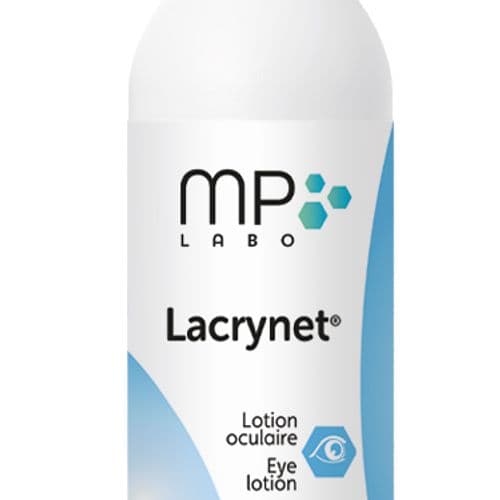
- A thorough cleansing of the eye contour using a suitable solution;
- the application of tear stimulants;
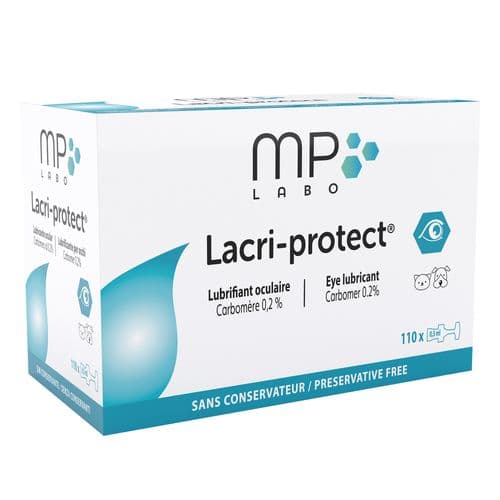
- the application of ocular lubricants.
If your vet suspects a secondary infection, they will also prescribe an antibiotic ointment or drops to apply directly to the cornea.
Detecting and managing KCS is essential. Indeed, if the ocular surface is not lubricated and protected, the cornea becomes vulnerable, significantly increasing the risk of ulceration.