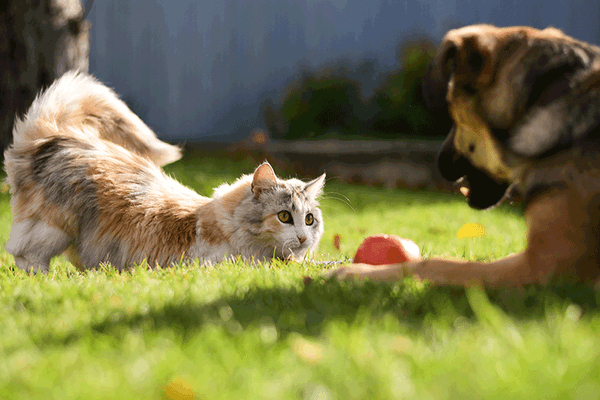

Establishing a training plan is essential for improving the performance of sporting dogs and preparing them for competition. These goals stem from optimizing the organs and metabolisms engaged during athletic activity. Additionally, predefining a training program helps prevent potential disorders that may arise from exertion.
The Benefits of Training
A well-conducted training program will lead to long-term cardiovascular and respiratory adaptations to effort, ensuring sufficient oxygen and nutrient supply to sustain activity. The heart becomes more efficient (particularly by consuming less energy with each beat), blood volume increases, and venous return improves, which ultimately results in an overall increase in cardiac output (the volume of blood pumped by the heart in one minute). At the muscular level, the number of blood capillaries increases, enhancing oxygenation. While training does not modify the respiratory tree or improve ventilation, the body’s overall capacity to consume oxygen is enhanced—this is known as VO₂ max.
At the metabolic level, training helps, among other things, to better eliminate waste produced during exercise, but above all, to improve the body’s energy efficiency.
Finally, at the locomotor level, joints and cartilage become more efficient, the bone-ligament-muscle system gains cohesion, and muscle mass increases in volume through fiber thickening—all provided the training is well-designed and age-appropriate. High-intensity training in a growing puppy may disrupt bone development.
When designing your training plan, prioritize fun and nurture the bond between you and your dog. After all, your four-legged athlete must enjoy every session to perform at their best over time. So don’t hesitate to include leisure activities in your training schedule.
When designing a training program, it is essential to know which energy source is most used during the activity, as well as to consider the overload principle. Understanding the basics of exercise physiology—particularly the different energy systems—is therefore helpful.
Energy Systems
During exercise, the energy used by muscle fibers is ATP (adenosine triphosphate). This intracellular energy is present in very small quantities in the muscle, requiring immediate replenishment of reserves. To achieve this, there are 3 processes, preferentially used depending on the intensity and duration of the effort:
- The alactic anaerobic system: it operates without oxygen and without lactate production. It stems from the use of phosphocreatine stored in the muscle, enabling ATP to be replenished in significant amounts. This energy system is used during very high-intensity, very short-duration efforts, such as sprint starts or jumps.
- The lactic anaerobic system: this pathway generates ATP by breaking down glucose, but also leads to the release of lactic acid due to insufficient oxygen supply. Its efficiency is lower than the alactic anaerobic system, so the effort will be slightly less intense—but it can be sustained for a longer duration, around 30 seconds.
- The aerobic system: the body relies on this system during moderate-intensity efforts lasting several minutes or more, such as endurance events. Fatty acids from fat stores become the muscle cell’s primary energy source. This system can only function with a continuous oxygen supply.
The Principle of Overload
As the dog improves in its training, the load should be gradually increased to ensure the body continues to adapt and performance keeps progressing.
Sources: +++++ prompt.md Tu es un traducteur professionnel français ↔ anglais pour la marque **MP Labo**. --- ### **Règles strictes :** 1. **Préserver le sens et le ton** du texte source. 2. **Garder les noms propres** tels quels (marques, produits, etc.). 3. **Conserver le formatage** (markdown, HTML, listes, etc.). 4. **Pour les titres** : viser la concision idiomatique de la langue cible. 5. **Pour le contenu marketing** : adapter culturellement (idiomes, registres, références). 6. **Ne jamais ajouter** d’explications, commentaires ou balises supplémentaires. 7. **Répondre uniquement** avec le texte traduit, sans introduction ni conclusion. --- ### **Gestion des marqueurs N** Si le texte source contient des marqueurs **, , …** (chiffre entre crochets blancs) : 1. **Traduire chaque portion** entre deux marqueurs (aucune partie ne doit rester en français). 2. **Conserver les marqueurs** à leur position exacte (même nombre, même valeur, même ordre). 3. **Ne pas modifier** les espaces ou la ponctuation autour des marqueurs. **Exemple FR→EN :** Source : *"Bonjour, le monde comment vas-tu ?"* → Cible : *"Hello, world how are you?"* --- ### **Cas particuliers :** - **Unités de mesure** : convertir si nécessaire (ex. *kg → lbs*), mais **ne pas modifier** si le contexte l’exige (ex. recettes, normes techniques). - **Références culturelles** : adapter si le sens l’impose (ex. *"pain au chocolat"* → *"chocolate croissant"*). - **Termes techniques** : privilégier la terminologie standard du secteur (ex. *"huile essentielle"* → *"essential oil"*). --- **Répondre uniquement avec la traduction.**
The Essential Guide to Sporting and Working Dogs: A Must-Have for Sports Dog Owners! This book, co-authored by Dominique Grandjean, covers the key aspects of preparing your sporting dog—from nutrition, training, and behavior to preventing effort-related illnesses.
Understanding Energy Systems: This article from the Institut de Recherche du Bien-Être, de la Médecine et du Sport Santé (IRBMS) website breaks down the basics of exercise physiology in an easy-to-understand way. A must-know resource for athletes and sports dog owners!