At 3 months, puppies and kittens are in a key growth phase. Many factors influence this stage, which is why it’s essential to provide them with food tailored to their metabolism. Their diet must carefully consider species and breed characteristics to meet their specific needs.
Growth
Growth is the most critical period. To ensure it goes as smoothly as possible, their diet must perfectly meet their nutritional needs. Dogs are typically classified into 4 groups based on their adult weight and size:
- Small dogs (1–10 kg)
- Medium dogs (11–25 kg)
- Large dogs (26–45 kg)
- Extra-large dogs (46–90 kg)
Small and very large dog growth patterns differ greatly, so it’s important to consider this factor. For instance, a small dog’s growth typically lasts around 8 months, while a very large dog’s growth can extend up to 24 months.
In cats, the most intense growth phase occurs between 4 and 5 months of age. During this period, kittens typically gain around 100g per week.
Also, males grow larger than females, and it’s between the 6th and 12th week that they become heavier. And like dogs, the larger the breed, the longer the growth period. This is especially true for the Maine Coon.
Other factors influence a cat's growth, such as its genes, but its environment also plays a role. For instance, a stressful environment can disrupt a kitten's sleep and negatively impact its growth (which occurs during sleep).
Dietary Adaptation
The younger the animal, the more sensitive it is as its metabolism is still developing, which is why it’s essential to provide it with a suitable diet to ensure healthy growth.
Your pet’s diet may also depend on other factors. For instance, after neutering or spaying, a specific diet will be recommended. Your vet and their veterinary assistant will be best placed to advise you on feeding your new companion.
During your visit to the vet, you’ll likely discuss switching your pet’s food. Your vet can assess whether their diet needs to be changed. If so, the transition should be gradual over 7 days: mix one-third new food with two-thirds of the old for 3 days, then half and half for the next 3 days, and finally two-thirds new food with one-third of the old for the last 3 days. It’s important to make this change gently to avoid upsetting their digestive system and give them time to adjust to their new diet.
Food Access
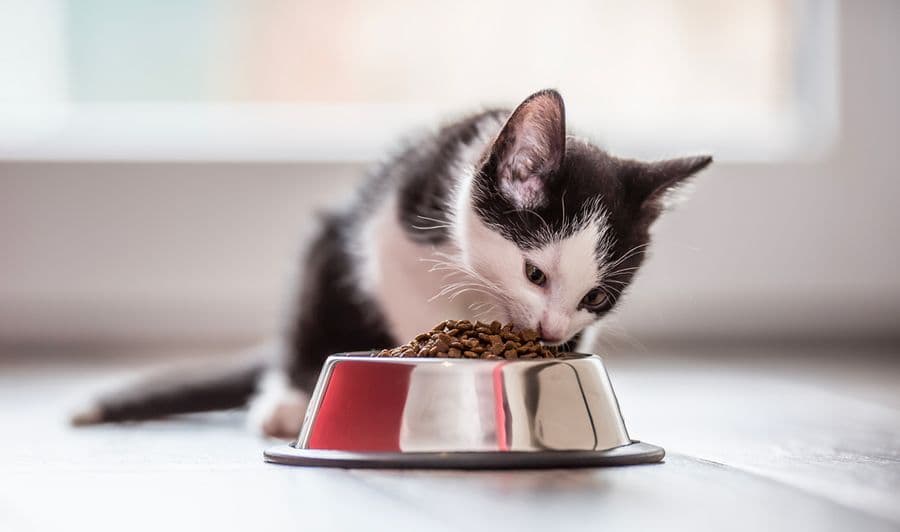
Your cat needs constant access to food. In fact, they eat between 12 and 14 meals a day. Various systems are available to dispense small portions throughout the day. Puppies require 3 to 4 meals a day. As they grow, it’s recommended to feed them twice a day, especially for large breeds. Don’t forget that your new four-legged friend should always have access to fresh, clean water.
There are various feeding containers available for meal distribution: the bowl is the most classic, but you can also use a puzzle feeder, for example, or even a Pipolino for cats. These devices are particularly useful for pets that eat too quickly. They also provide mental stimulation!