
Does your pet tend to ingest snow or very cold water, and you're wondering if it could be harmful? Let’s break it down.
Many dogs tend to eat snow when playing in it. This behavior is less common in cats, though they may sometimes drink very cold water. Be careful—these habits can potentially harm your four-legged friends: there’s a risk of gastritis, and you should also watch out for poisoning from de-icing salt.
Eating snow or very cold water can cause stomach pain and irritate the digestive tract. When ingested repeatedly, this can lead to diarrhea and gastritis (with vomiting), potentially progressing to gastric ulcers. It’s best to distract your pet if you catch them eating snow—offer a toy or, occasionally, a treat. Also, make sure to provide them with water, as they may simply be thirsty.
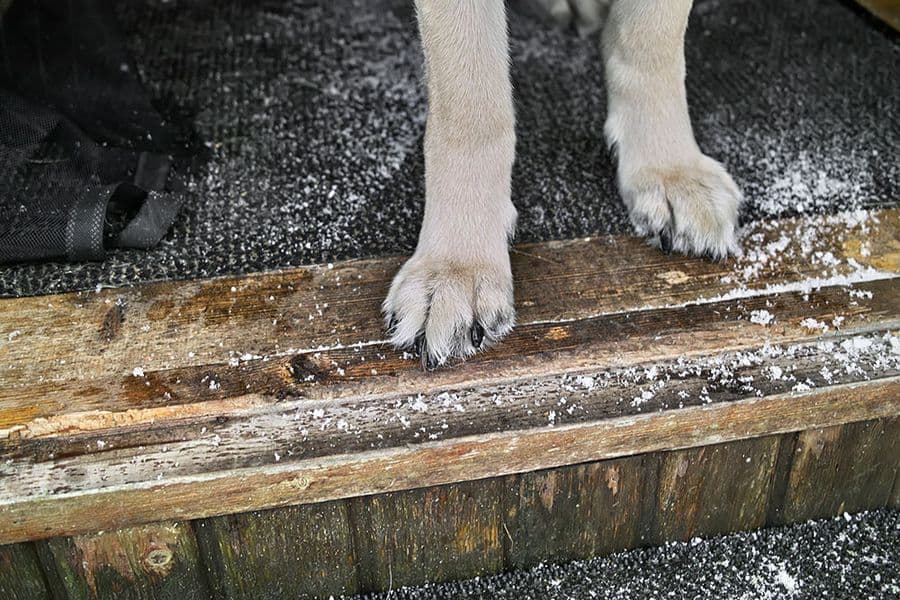
In winter, another risk is linked to the ingestion of de-icing salt. The type used on roads as temperatures drop often consists of sodium chloride (our table salt) or a mix of salt and calcium chloride. The latter makes the salt more effective. De-icing salt—perhaps not as harmless to the environment as one might think—is typically used preventively: it stops snow from sticking to the ground and prevents frost formation. Prolonged skin contact with salt can cause irritation, which is why it’s recommended to rinse your pet’s paws after a walk. Your four-legged friend may also ingest de-icing salt (by swallowing snow, for example). Stay alert, as this could lead to digestive issues or even poisoning, with potential neurological or kidney problems. Lastly, salt ingestion can significantly increase water intake, which may trigger gastric dilatation-volvulus syndrome, particularly in large dogs.
If in doubt, contact your vet.