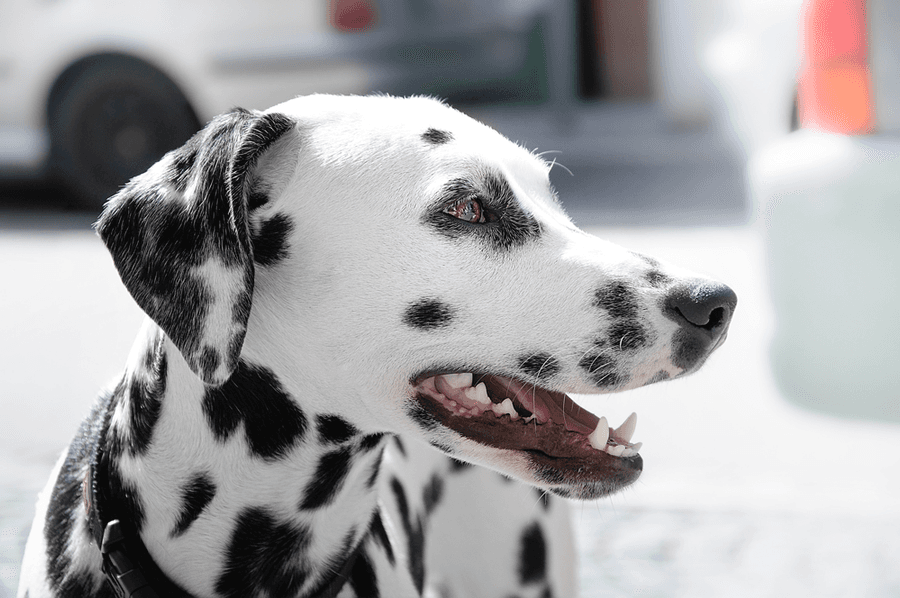
Teeth: Different Shapes… for Different Purposes
Dogs and cats are carnivores, and their teeth clearly show it! Carnivores have teeth designed to tear and crush food. They also move their jaws up and down. Herbivores, on the other hand, chew using side-to-side motions, and their teeth are quite different from those of dogs and cats.
The dentition of our domestic carnivores (link to emag: oral cavity of dogs and cats) therefore includes:
- Incisors—with a fleur-de-lis shape—to cut, shear, and trim;
- Canines or fangs—large and sharp—to grasp and hold prey;
- Premolars to tear meat;
- Molars—with 1 to 3 roots—to grind food.
What Is the Role of Saliva?
Saliva is made up of:
- the mixture of secretions from the various salivary glands in the oral cavity of dogs and cats,
- shed mucosal cells from the oral lining—which are dead,
- microorganisms and their byproducts,
- and food debris.
This liquid therefore contains water and minerals, mucins, immune cells, and various enzymes. It serves as a lubricant, a protective barrier, and an antibacterial agent—despite the significant number of bacteria present. For instance, our canines' mouths may harbor over 300 species of bacteria! Unlike human saliva, the saliva of dogs and cats does not play a role in the first stage of digestion.
Certain enzymes found in saliva, such as peroxidases, interfere with glucose metabolism and help limit bacterial growth. They are now included in some oral care gels.