
"Just like us, dogs and cats can get cavities." True or false?
That’s true… but it’s rare.
The most common disease affecting our pets' oral cavity is periodontal disease.
Gum disease… what?
In Ancient Greek, *para* means "around," and *odonte* means "tooth."
The tooth, embedded in the jawbone and protected by the gum, is nourished by blood vessels and innervated.
Moreover, the tooth isn’t fused to the jaw: it’s held in place by a ligament, which secures it firmly.
The periodontium is the entire support system of the tooth, and periodontal disease is the condition affecting this area.
Is periodontal disease common?
Yes. It’s even the most common oral health issue in our pets. Up to 8 out of 10 dogs and cats are affected, starting as early as 2 or 3 years old.
Everything Starts with Plaque
The oral cavity of domestic carnivores contains over 300 types of bacteria.
Some of these bacteria stick to teeth, creating a bacterial biofilm. Layers of biofilm build up into dental plaque, which then mineralizes to form tartar. However, tartar has a rough surface, further promoting bacterial adhesion.
And that’s how the vicious cycle of limescale buildup takes hold.
Periodontal Disease
Tartar doesn’t (yet) mean periodontal disease. However, tartar buildup will quickly attack the gums and cause inflammation. The gums become red and painful, and your pet develops bad breath. This is gingivitis, the first stage of the disease.
Then inflammation can progress deeper, attacking the alveolar bone and destroying the ligament. A pocket forms between the gum and the tooth, causing it to loosen. At this stage, the damage is irreversible.
Can Periodontal Disease Lead to Complications?
The infection can spread along the tooth root, causing an abscess, osteomyelitis, or even a mandibular fracture.
Bacteria can also spread throughout the animal's body, causing damage to the liver, kidneys, or heart.
How Is Periodontal Disease Treated?
The best care is still prevention. Good oral hygiene helps prevent tartar buildup. You can also offer your pet chew toys or dental treats, or feed them dry food formulated to reduce tartar.
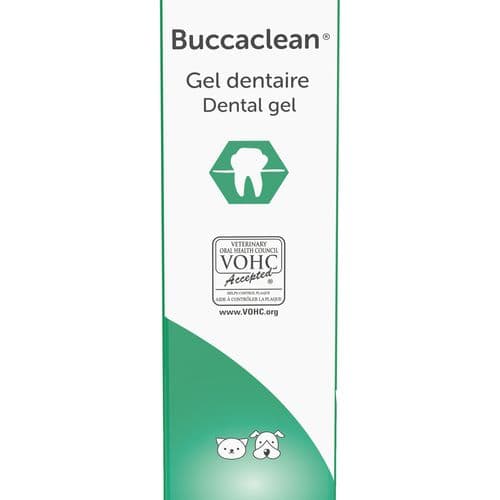
Buccaclean® GelA gel to apply between the lips and gums, it helps limit bacterial growth and adhesion. It also soothes inflamed gums. A great alternative to daily toothbrushing, which many owners find tedious.
In more advanced stages, your vet may need to manage the disease by performing a dental scaling, combined with medical or surgical treatment.