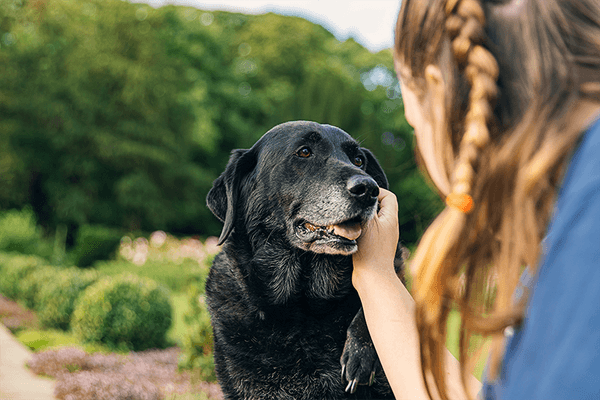

Fewer wild outbursts and frantic sprints, and more gray hairs around the muzzle… It’s clear your four-legged friend is getting on in years, and you’re probably wondering when they’ll officially join the senior club.
What Exactly Is Aging?
Aging is a biological, progressive, and irreversible process that begins at birth and continues until death. It affects all organs and vital functions, leading to changes at the cellular, metabolic, and organic levels. The symptoms associated with this universal process vary from one individual to another. That’s why it’s essential to prevent their onset, particularly by scheduling regular visits with your veterinarian.
What changes should I expect?
Aging can lead to changes in:
From its interactions with you or its peers:
Aging is very often linked to a decline in cognitive functions, as well as reduced vision, smell, hearing, and touch. These major changes can make relationships—especially with peers—more challenging. You’ll likely become a key reference point for your pet as their abilities decline. Additionally, mobility issues may arise. Without proper care, these can often lead to chronic pain, further complicating communication.
Its Nutrition:
The digestive system of aging animals is, of course, not spared from these major changes. Fickle appetite, slower digestion, the need to support vital organs—it’s best to adjust their diet!
From its reproduction:
Additionally, aging brings about reproductive changes. We notably observe an increase in the frequency of genital conditions in female dogs and cats, as well as prostate disorders in males. If your four-legged companion hasn’t been neutered, aging also affects their fertility.
Aging-related changes vary from one pet to another. To support them best, don’t hesitate to check in with your regular vet twice a year—or even more often.
At What Age Does My Four-Legged Companion Become "Old"?
Pet lifespan—and thus entry into the senior category—varies depending on your pet’s size. When it comes to dogs, small breeds typically live longer—14 to 18 years—and are considered senior around the age of 10. Medium-sized breeds have a life expectancy of 12 to 14 years and transition into the senior group at around 8 to 9 years old. For large or giant breeds, lifespan shortens to 8 to 10 years, and they become seniors at roughly 5 to 7 years of age. Cats are generally regarded as seniors after about 12 years.